OH, WHAT A NIGHT
Monday, August 15. What a night. I have called a lot of baseball games, I have never seen anything like the game I witnessed Monday in a 3-0 Brewers win versus the Dodgers at Miller Park.
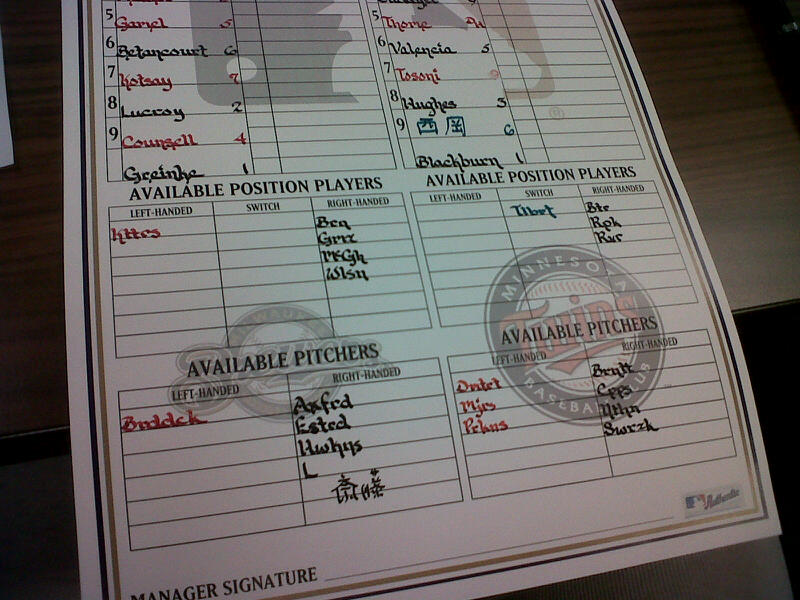
A triple play and four double plays behind shutout pitching from Randy Wolf and John Axford. There are 27 defensive outs in a 9-inning game. The Crew was able to secure 11 of those 27 outs…on FIVE pitches!!!
This slideshow requires JavaScript.
The Brewers now own a six game lead, their largest at this point of season since they led the AL East on August 27, 1982 by 6 ½ games, a lead that would evaporate yet saved by a division clinching win on the final day of season. The only division title in franchise history to date.
After the game, the Brewers fortunes continued as they signed their top two first-round draft picks (Texas RHP Taylor Jungman and Georgia Tech LHP Jed Bradley).
…And then there is this from Elias:
The Brewers continued to roll with a 3-0 victory over the Dodgers on Monday night, as we wondered, how many good things can happen to one team in one game? The Brewers’ pitching, batting and fielding all excelled:
Randy Wolf and John Axford combined for the shutout; Ryan Braun, Jonathan Lucroy and Corey Hart homered; and the Brewers made a triple play. There have been nearly 200,000 games played in major-league history, but the Brewers became the first team in major-league history – yes, the first – to earn a shutout win, hit at least three home runs, and execute a triple play in the same game.
The victory lifted the Brewers’ record to 71-51, marking the first time that they have gone 20 games above .500 this early in a season since 1982, when it took them only 110 games (65-45). And the win lifted Milwaukee’s home record to 45-15; you have to go back to 1998 to find the last time that a major-league team won 45 of its first 60 home games. (In that 1998 season, the Yankees started out 48-12 and the Padres started out 46-14 at home.)
Finally, the one-time Wall-Bangers have become Zero-Hangers. Milwaukee has won its last three games by scores of 1-0, 2-1 and 3-0 – the first time in franchise history that the team has won three straight games without scoring as many as four runs in any of them!
-BA
See Ball, Hit Ball
Oh, to be young again.
Too bad my big league dreams ended on a college baseball field. I’m not complaining. Playing baseball helped pay my way through college and led me to the broadcasting career I enjoy so much now. But, I had one of those, “I wish I knew that then…” moments Sunday after a fascinating conversation with Dale Sveum about the art of hitting. As the Brewers hitting coach, Sveum’s job is to unlock the many doors to hitting success. Needless to say, he carries a full set of keys. In the simplest of terms, he unlocked a big door for me. Too bad it was 20 years too late!
Sveum broke down hitting into three parts. The first two, the most important, depend on the eyes and the brain: One, finding and focusing on the ball out of the pitchers hand and two, making a decision to swing or not. The third is the most physical of the three, the actual swing, putting the barrel of the bat down the eye line to the baseball with hands, hips, legs, feet, etc…all at work together. The reason hitting a baseball is the hardest thing to do in sports is because all three have to be applied in HALF a second.
My “a-ha” moment was when I realized that most of the baseball world spends most of their practice time on the third and final step, swing mechanics. Google “hitting instruction” and you’ll find hundreds of philosophies and “gurus” on the proper swing. Truth is, there is no single “correct” way to swing a bat. There are basic fundamentals that have to be in place to hit a baseball but the heart of successful hitting is pitch recognition. It is THE most important aspect and THE least often practiced skill in amateur baseball.
In your baseball playing life, how often have you asked or been asked to “track” pitches? No swings. Just stand there with a bat and find the baseball out of the pitchers hand then make a decision whether it is a hittable pitch before it hits the catcher’s mitt? It is so easy in hindsight. It is so hard in real time. I played baseball from the age of five through college and NEVER spent any great amount of time tracking pitches and improving my pitch selection ability. On the flip side, I spent countless hours working on swing mechanics. Drills after drills, batting practice, tee work, soft toss, video, etc…all the while neglecting the very thing a pitcher is trying to do to me as a hitter, trick me with pitch selection.
I’m not saying pitch selection wasn’t discussed all those years, just that improving the specific SKILL of pitch selection was never made clear until my conversation with Dale Sveum. Defining the skill offers the opportunity to improve the craft. Your eyes need just as much practice as your below-the-neck activity. Your brain needs to be pushed, worked out, practiced, rested, and TRUSTED (some call that confidence) so the physical part of hitting can actually be applied.
So baseball coaches, I’m encouraging you to make time for your hitters to stand still. Stand still and practice seeing and thinking! Stand and track pitches. Get a good understanding of the strike zone. Implement eye training techniques like fighter pilots do. Make up your own games on vision and decision making. If you’re still an active baseball player, take my advice and work on these skills. Make it important before it’s too late. A (hitter’s) mind…is a terrible thing to waste!
Happy tracking.
BA


Recent Comments